


Do You Have to Use One-Pedal Driving in a Hyundai EV?
You do not have to use one-pedal driving to enjoy a Hyundai EV. On models equipped with i-PEDAL, it is a selectable function. Other regenerative braking settings let you use the accelerator and brake pedals in a more familiar way.¹
That flexibility matters if you’re interested in electric driving but unsure about the slowdown you may feel when lifting off the accelerator. Your test drive should help you find a comfortable setting—not leave you thinking there is only one way to drive.
What One-Pedal Driving Means
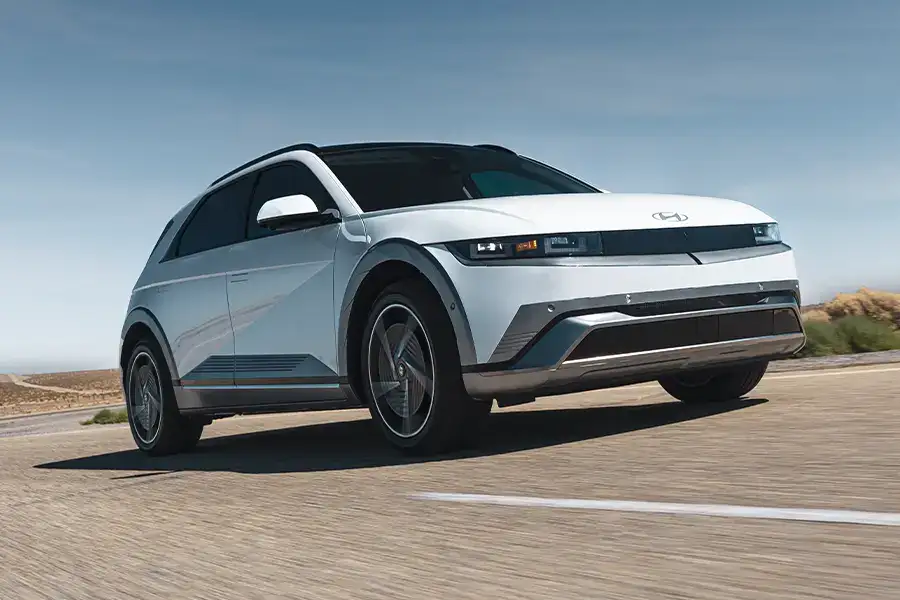
With i-PEDAL activated, the accelerator helps you control acceleration and deceleration. Easing off slows the vehicle, and the system can assist with bringing it to a stop under suitable conditions.¹
For errands along Ten Rod Road, you might appreciate managing more of your speed through the accelerator. Another driver may prefer gentler deceleration when lifting off and more frequent use of the brake pedal.
Neither preference needs to decide whether an EV belongs on your shopping list. A routine stop at North Kingstown Free Library can still be part of a familiar two-pedal driving experience.
Hyundai Regenerative Braking Settings Explained
Regenerative braking uses the electric motor to slow the vehicle while recovering energy and returning it to the high-voltage battery.² One-pedal driving uses that capability, but it is not the only way regenerative braking operates.
The available settings depend on the Hyundai model and year. Here are the differences to explore:
| Setting or function | What to compare |
| Lower regenerative braking level | Gentler deceleration when you lift off the accelerator |
| Higher regenerative braking level | Stronger deceleration when you lift off; this alone does not mean the vehicle will stop completely |
| i-PEDAL | Accelerator-based speed control, including assistance with stopping under suitable conditions |
| Smart regeneration, where equipped | Automatic adjustment of regenerative braking in response to detected conditions |
On the drive home from a walk at Frenchtown Park, consider how smoothly you can reduce speed with the selected setting. The goal is to understand the vehicle’s response and feel comfortable controlling it.
Is Regenerative Braking Still Available Without i-PEDAL?
Yes. Selecting another regenerative braking level does not require i-PEDAL. For example, the 2025 IONIQ 5 provides adjustable regenerative braking levels alongside its selectable i-PEDAL function.¹ ³
You do not have to choose the strongest slowdown simply because you drive an EV. For a day combining household errands with longer stretches of driving around Slocum, compare the available settings and choose an appropriate one for the conditions.
What Does Smart Regeneration Do?
On equipped models, smart regeneration adjusts regenerative braking using inputs such as the distance to the vehicle ahead and the road’s gradient. It remains a driver-support function; you are responsible for speed and braking.⁴
Smart regeneration and i-PEDAL are separate operating choices. On the 2025 IONIQ 5, smart regeneration must be turned off before i-PEDAL can be activated.¹
Passenger comfort is worth considering, too. After an outing at Calf Pasture Point, a smoothly controlled drive home may matter more to your passengers than which setting you selected. Compare the feel rather than assuming one mode suits everyone.
Can You Turn i-PEDAL Off?
Yes. Follow the instructions for your specific vehicle.
On the 2025 IONIQ 5, pulling the right paddle once while i-PEDAL is active turns it off. Other models or years may operate differently, so learn the controls and confirm the active setting on the instrument display.¹
Before starting a normal driving day along Old Baptist Road, take a moment while parked to check your settings. That is especially useful while you are getting familiar with a new vehicle.
If your household shares pickups at Stony Lane Elementary, both drivers should learn how to select and recognize their preferred setup.
Keep the Brake Pedal Part of Your Routine
“One-pedal” describes a convenience feature. It does not mean the vehicle will always stop without your help.
Vehicle and road conditions can prevent i-PEDAL from bringing the vehicle to a complete stop. Use the brake pedal whenever needed, including on slopes or when the vehicle is not slowing as expected. Do not use i-PEDAL on slippery roads.¹
Regenerative braking adjustment also has limits. On the 2025 IONIQ 5, the selected drive mode, Smart Cruise Control operation, and a fully charged battery can affect whether you can change the regenerative braking level with the paddles. These are adjustment limitations—not a statement that the vehicle loses its braking capability.³
When approaching a parking space at Wickford Junction, focus on the maneuver and use the brake as needed. Familiarity with the settings should support attentive driving.
Compare the Settings on a Hyundai EV Test Drive
At Nucar Hyundai of North Kingstown, ask for an explanation of the braking settings while parked, then experience the vehicle on an appropriate test-drive route.
Focus on three things:
- How smoothly you can control deceleration.
- How comfortable the response feels to you and your passengers.
- How easily you can select and identify the active setting.
A weekday routine around Davisville may feel different from weekend travel to Goddard Memorial State Park in Warwick. Think about both as you evaluate the vehicle, and invite another household driver to compare it if you will share the Hyundai.
Explore our Hyundai IONIQ 5 inventory or IONIQ 9 inventory to begin comparing electric options. The Nucar Network broadens your vehicle search, while Nucar Cares supports the communities we serve. Clear answers and help finding a Hyundai that fits your routine are more reasons Everyone Loves a Nucar!
0 comment(s) so far on Do You Have to Use One-Pedal Driving in a Hyundai EV?